
Managing Large Events: Leisure Management Competencies
A large event is an activity or occurrence that involves many participants and has a significant scale and impact, whether socially, economically, or culturally. Examples of large events include international conferences, large-scale music festivals, trade fairs, and world-class sports championships. These events not only serve as entertainment but also play an important role in supporting economic growth and strengthening the image of tourist destinations.
The rapid development in the tourism and entertainment sectors, especially with the rise of digitalization and the evolution toward the metaverse, provides great opportunities for graduates of the Bachelor’s Program in Recreation Business Management. They have the opportunity to actively engage in the design, execution, and management of various large events such as conferences, festivals, music concerts, and global-level sports championships.
Recreation business management is a field of study that equips individuals to manage various recreational activities, including business planning, the application of tourism marketing strategies, and the management of recreational destinations. Graduates of this program not only understand the commercial aspects of the recreation sector, but are also able to integrate cultural values, environmental sustainability, and technology in creating meaningful and sustainable recreational experiences.
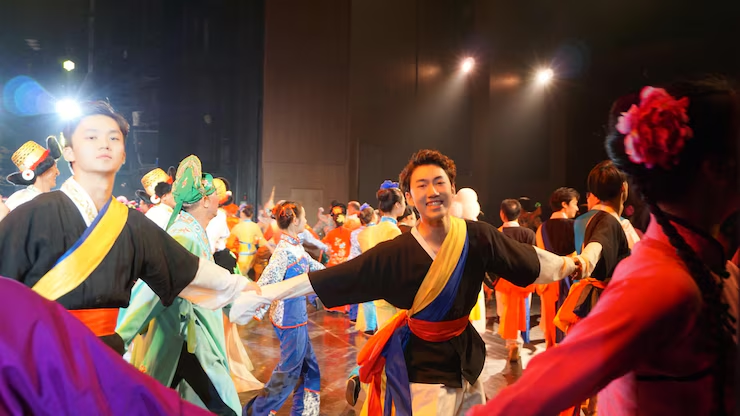
Skills Required in Managing Large-Scale Event
The implementation of large-scale events demands a combination of technical skills, leadership, and the ability to interact with various stakeholders. Graduates of recreation business management are prepared with the following abilities:
- Strategic Planning
Skills in designing events from the initial stage to final execution:
- Formulating event goals
- Creating timelines and budget estimates
- Determining the venue and organizing logistical needs
- Team and Relationship Management
Personnel and relationship management is a crucial aspect:
- Coordinating with sponsors, vendors, and security personnel
- Organizing the core team and implementation volunteers
- Negotiating and maintaining efficient communication
- Mastery of Digital Technology
With the arrival of the metaverse era, events are no longer physically limited:
- Using virtual and augmented reality (VR/AR) technologies
- Managing digital campaigns and promotions on social media
- Conducting data processing and tech-based evaluations
- Understanding of Recreation Concepts
Graduates understand recreation as an activity that supports physical, psychological, and social balance. Therefore, every event is designed not just for entertainment, but also to offer educational value and strengthen social ties.
Effective Strategies for Running Large Event
Organizing large-scale events requires a systematic strategy and responsiveness to emerging dynamics. Here are several approaches commonly practiced by experts in the field:
a. Needs and Target Market Analysis
Understanding participant characteristics and their expectations is a fundamental step.
b. Multisector Collaboration
Partnering with the tourism business sector, media, and local government institutions to broaden the event’s reach.
c. Targeted Promotion
Implementing tourism marketing strategies by:
- Promoting through digital platforms
- Collaborating with influential figures
- Offering special tickets like early bird and loyalty programs
d. Risk Management
Accurately identifying risks and preparing effective preventive solutions.
e. Evaluation and Feedback
Measuring event success based on data such as participant turnout, satisfaction levels, and financial achievement.
Why Event Management Skills Are Important
Event organizing skills are highly needed in many areas, including:
- Tourist destination management: Events are a key attraction for travelers.
- Entertainment and recreation industry: Concerts, festivals, and art shows are core elements of this sector.
- Event and festival management: A distinct career path within tourism and recreation studies.
Other benefits include:
- Driving local economic growth: Large-scale events can attract tourists and create job opportunities.
- Enhancing regional reputation: International events introduce local culture to a global stage.
- Supporting innovation and flexibility: Especially in using the metaverse to host hybrid events.
What Is Needed to Run a Large Event?
In addition to the skills and strategies mentioned, large-scale event execution requires a cross-disciplinary and comprehensive approach.
Here are several key elements to consider:
1. Concepts and Themes
Designed to align with recreational goals and participants’ preferences.
2. Recreation Business Planning
Including financial arrangements, sponsor identification, and revenue potential.
3. Sustainability and Social Impact
Integrating sustainable tourism business principles such as waste reduction, eco-friendly energy use, and community involvement.
4. Cultural and Educational Elements
Adding ecotourism and cultural tourism content to the event program.
5. Event Format Flexibility
Execution can be in-person, online, or hybrid in line with current trends in the tourism industry.
Conclusion
The field of recreation business management offers wide opportunities for young generations aspiring to build careers in a dynamic, human-experience-oriented industry. In this perspective, recreation is not merely entertainment, but an effective medium to promote tourism, preserve culture, and drive local economies.
Through education in tourism programs focusing on recreation management, graduates will be able to:
- Design recreation business plans
- Organize various types of large events
- Apply technologies such as the metaverse
- Operate sustainable tourism businesses
As the tourism industry’s role continues to grow, expertise in managing large events becomes not only relevant but essential in contributing to broad social and economic development.
For those interested in the world of recreation and tourism business, choosing to study in recreation business management is a strategic decision that brings promising prospects for the future.n kontribusi nyata bagi pembangunan negeri.
Campus Address and Contact
Campus Address: Jl. Telekomunikasi No. 1, Bojongsoang, Bandung
Website: https://blm.telkomuniversity.ac.id/
Email: [email protected]
Tags: S1 Leisure Management | Leisure Management | S1 Leisure Management Telkom University

